Resistant starch: metabolic impact on gut microbiome diversity
Resistant starch occupies a particular biochemical niche in human nutrition. It survives digestion in the small intestine and reaches the colon, where resident microbes can ferment it into short-chain fatty acids (SCFAs).
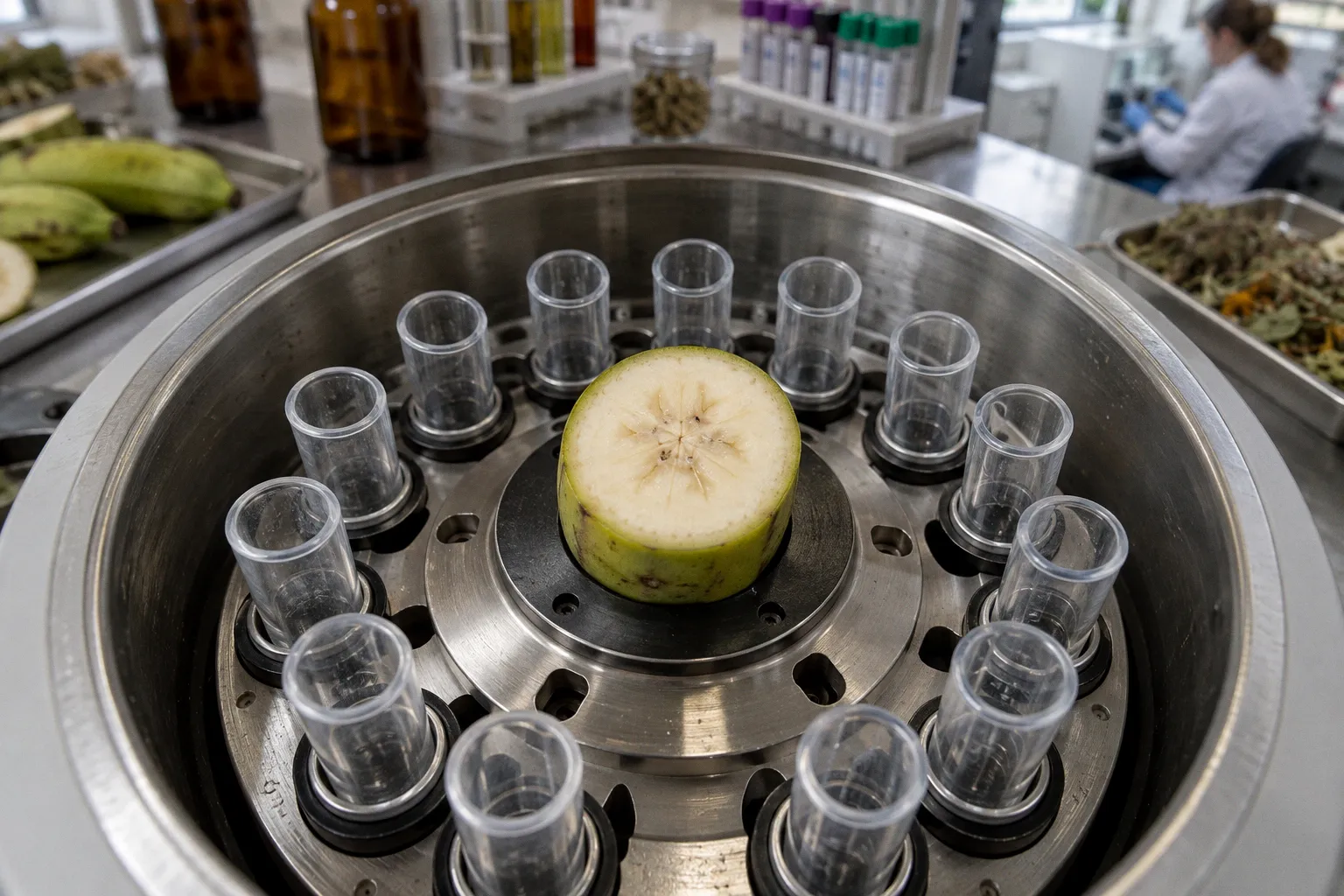
Those metabolites link the food on the plate with several downstream processes: microbial cross-feeding, intestinal barrier maintenance, appetite signaling, and glucose metabolism.
That does not make resistant starch a universal solution for gut health. Its effects depend on the structure of the starch, the rest of the diet, the speed of fermentation, and the microbial community receiving the substrate. The same portion of cooled rice or potato may be well tolerated by one person and produce marked bloating in another. A person with a relatively low abundance of starch-degrading organisms may also obtain a different SCFA profile from the same food.
Resistant starch is not defined by solubility or viscosity, as many other fibers are. It is defined by what human digestive enzymes fail to break down during small-intestinal transit. That resistance is the starting point. The metabolic effect emerges later, after colonic microbes process the material.
Resistant starch is not digested in the usual sense; its value depends on what the gut microbiome can do with what escapes digestion.
The Mechanics of Fermentation: How Resistant Starch Escapes Digestion
Human salivary and pancreatic amylases are efficient, but they do not have unlimited access to every starch structure. A starch granule may be protected by an intact plant cell wall, organized into a crystalline structure, or altered by cooking and cooling in a way that makes it less available to enzymatic hydrolysis.
When this happens, part of the starch moves through the stomach and small intestine without being converted into absorbable glucose. It then reaches the cecum and colon, where bacteria with the relevant enzymatic machinery begin to dismantle it.
The first stage is carbohydrate breakdown. Primary degraders attack the larger starch structures and release smaller carbohydrates, including maltodextrins, maltose, and other oligosaccharides. Other organisms then use these intermediate products. This is one reason the response to resistant starch cannot be understood by looking at a single bacterium or a single metabolite.
The major SCFAs produced during carbohydrate fermentation are:
- Acetate, the most abundant of the three in many gut environments, which can be used by other microbes and enters broader host metabolic pathways.
- Propionate, which travels through the portal circulation to the liver and may participate in gluconeogenic and appetite-regulating signaling.
- Butyrate, an important fuel for colonocytes and a metabolite associated with epithelial barrier support and immune regulation.
The final SCFA pattern is not fixed. It depends on the substrate, the bacteria present, intestinal transit, pH, and whether intermediate metabolites are efficiently passed from one microbial group to another. Resistant starch often supports butyrate production, but the outcome is not guaranteed and should not be reduced to a simple one-food-one-metabolite formula.
Fermentation is a community process
A useful way to understand resistant starch is as a shared resource moving through a microbial network.
1. A primary degrader makes the starch chemically accessible.
2. Other bacteria consume the released oligosaccharides and produce metabolites such as acetate and lactate.
3. Butyrate-producing organisms use some of those products as fuel.
4. The resulting SCFAs influence the local intestinal environment and host signaling.
This process is called cross-feeding. It is central to the metabolic impact of resistant starch because the organism that first opens the substrate is not necessarily the organism that produces the final metabolite of interest.
The presence of resistant starch may therefore increase the availability of fermentable carbohydrate without automatically increasing microbial diversity. Diversity refers to the range and relative distribution of organisms in the community; function refers to what that community can do. A diet can alter fermentation activity or SCFA production without producing a dramatic change in the number of detectable taxa. Conversely, a change in community composition may have little practical effect if the organisms perform overlapping functions.
Microbial Gatekeepers: Ruminococcus bromii and the Cross-Feeding Network
Ruminococcus bromii is widely regarded as an important gateway organism for resistant-starch degradation, especially for some granular and retrograded starches. It is particularly good at accessing structures that many other colonic bacteria cannot efficiently use on their own.
That role matters, but it should not be described as an on-off switch. Resistant-starch fermentation does not disappear simply because R. bromii is present at a low abundance or is not detected in a particular sample. Other bacteria can contribute to the breakdown of resistant starch, and the available pathways vary according to the starch structure and the broader microbial community.
A more accurate description is that low abundance or limited activity of R. bromii may reduce the rate or extent of initial starch liberation. That can make downstream cross-feeding less efficient, particularly when few alternative primary degraders are available. It does not mean that the substrate must pass through the colon completely untouched.
A simplified trophic sequence may look like this:
1. Ruminococcus bromii and other primary degraders gain access to resistant starch and release smaller carbohydrate fragments.
2. Bifidobacterium, Bacteroides, and other carbohydrate-utilizing organisms consume some of those fragments, producing acetate, lactate, and additional fermentation products.
3. Butyrate-producing organisms, including members of the Eubacterium rectale, Faecalibacterium, and Roseburia groups, use available intermediates to generate butyrate.
4. The accumulation of SCFAs changes the local chemical environment and provides signals to intestinal and immune cells.
The exact participants differ between individuals. Even organisms within the same broad genus may have different substrate preferences and metabolic capacities. A stool test that identifies a taxon also does not necessarily show whether that organism is active, because abundance and function are related but not identical.
Ruminococcus bromii is an important gateway to resistant-starch fermentation, but it is not the only door. A lower abundance may narrow or slow the pathway without eliminating fermentation altogether.
This distinction is clinically useful. It prevents the common mistake of treating one bacterial marker as a verdict on whether resistant starch will work. A person with low detectable R. bromii may still respond through alternative degraders, gradual adaptation, or a different resistant-starch source. The relevant question is not simply whether one organism is present, but whether the community can process the particular substrate being provided.
Structural Classification: From RS1 to RS4 and the Cooling Effect
Resistant starch is a functional category rather than a single molecular substance. Its behavior depends on why it resists digestion.
| Type | Structural basis | Common food sources | Typical considerations |
|---|---|---|---|
| RS1 | Starch physically enclosed within intact plant structures | Whole grains, seeds, and legumes | Milling, chewing, and cooking can change how accessible it becomes |
| RS2 | Native starch granules with a relatively resistant crystalline structure | Green bananas, raw potato starch, and some high-amylose foods | The effect changes as the food ripens or is heated |
| RS3 | Retrograded starch formed when cooked starch cools | Cooked-and-cooled potatoes, rice, pasta, and some grains | Often practical to obtain through ordinary meals |
| RS4 | Chemically modified starch | Some commercial fiber ingredients and processed foods | Fermentation depends on the specific modification |
These categories overlap less neatly in real food than the table suggests. A cooked legume may contain several forms of resistant starch at once. Processing, particle size, ripeness, cooking time, storage, and reheating can all alter the final amount that reaches the colon.
Cooling cooked starches for gut health
The cooling effect is best understood as a change in starch organization. Heating makes starch granules swell and gelatinize, generally increasing their accessibility to digestive enzymes. As the cooked starch cools, some amylose and amylopectin chains reassociate into more ordered structures. Those structures are less readily digested and can contribute to RS3.
This is why cooked-and-cooled potatoes, rice, or pasta are often discussed in relation to resistant starch food sources for digestion. The process is not a magic transformation, and cooling does not convert every gram of cooked starch into resistant starch. It simply shifts part of the starch toward a less digestible form.
Several practical variables matter:
- Cooking method: Soft, thoroughly gelatinized starch may behave differently from a firm, minimally processed food.
- Cooling time and temperature: Longer cooling generally allows more retrogradation, although the final amount varies by food.
- Food structure: An intact potato or legume does not behave exactly like a finely mashed or milled product.
- Reheating: Heating can reduce some of the retrograded structure, but it does not necessarily remove all of it.
- The meal around it: Fat, protein, acidity, and other fibers can affect gastric emptying and the overall glycemic response.
For this reason, cooled starch should be treated as one component of a meal rather than as a guaranteed metabolic intervention. Food safety also matters: cooked rice, potatoes, pasta, and other starches should be cooled and stored promptly under appropriate conditions. Resistant starch is not a reason to leave cooked food at room temperature for prolonged periods.
Metabolic Outcomes: Insulin Sensitivity and SCFA Production Pathways
The metabolic effects of resistant starch are usually discussed through SCFA signaling, changes in the intestinal environment, and the slower absorption of carbohydrate. These mechanisms are plausible and biologically active, but their strength varies between individuals and studies.
Insulin sensitivity and appetite signaling
SCFAs can activate G-protein-coupled receptors, including FFAR2 and FFAR3, on enteroendocrine and immune cells. These pathways are associated with the release of hormones such as GLP-1 and PYY. GLP-1 participates in glucose-dependent insulin secretion and gastric regulation, while PYY can influence appetite and intestinal transit.
The practical consequence is not that resistant starch directly acts like a medication. Rather, replacing a portion of rapidly digestible starch with a less digestible, fermentable form may alter the timing of glucose appearance, increase colonic fermentation, and influence gut-derived signaling. Some controlled studies report improvements in insulin sensitivity or post-meal glucose handling, while others find smaller effects. Baseline metabolic health, dose, duration, and the food matrix all matter.
Butyrate has also been studied in relation to epithelial metabolism, inflammation, and cellular signaling. Its effects are not limited to one tissue, and the outcome depends on concentration, location, and the surrounding microbial environment. A higher fecal concentration does not automatically mean that every tissue receives a beneficial metabolic signal.
Hepatic metabolism
Because acetate and propionate enter the portal circulation, fermentation in the colon can influence liver metabolism. Propionate may affect hepatic substrate handling, while acetate can be used in several metabolic pathways. Changes in gut-derived signaling may also affect appetite, insulin action, and lipid metabolism indirectly.
Evidence concerning liver fat and resistant starch is promising but should be interpreted carefully. Results depend on whether resistant starch is added to the diet or replaces another carbohydrate, whether total energy intake changes, and what the participants were eating otherwise. A cooled potato added to an already energy-dense meal is not metabolically equivalent to a portion of cooled legumes replacing refined starch.
Body composition and energy availability
Resistant starch provides less readily available energy to the host than fully digestible starch, although it is not literally calorie-free. Microbial fermentation produces SCFAs that the body can use, and the amount recovered depends on the substrate and the individual microbiome.
Any effect on body weight or body composition therefore sits within a larger energy and behavior context. Resistant starch may support satiety, improve meal structure, or make a high-fiber diet easier to maintain. It cannot compensate for a consistently excessive energy intake or replace adequate protein, movement, sleep, and treatment of an underlying metabolic condition.
Butyrate production and digestive wellness
Butyrate is often the headline metabolite in conversations about resistant starch. It serves as a major energy source for many colonocytes and is associated with pathways involved in epithelial integrity and immune balance. The relationship between butyrate production and digestive wellness is real but not simplistic.
More fermentation is not always better. A rapid increase in fermentable carbohydrate can generate gas faster than the gut can accommodate it. A person may experience distension or urgency before any longer-term benefit becomes apparent. The goal is not to force the largest possible dose, but to find an amount that supports regular fermentation without overwhelming tolerance.
Navigating Individual Variability in Gut Microbiome Responsiveness
The same resistant-starch dose can produce different outcomes across individuals. Several variables help explain the spread:
- Baseline microbial composition: The abundance and activity of primary degraders and butyrate producers influence how quickly the substrate is used.
- Habitual fiber intake: A person already eating legumes, whole grains, vegetables, nuts, and seeds may have a more adapted fermentative community than someone moving abruptly from a low-fiber diet.
- Transit time: Longer contact with colonic microbes may increase the opportunity for fermentation, while rapid transit can change where and how strongly it occurs.
- Starch structure: RS2 from green banana or raw potato starch is not interchangeable with RS3 from cooled rice or potatoes.
- Meal context: Protein, fat, acidity, total carbohydrate, and portion size affect digestion before the substrate reaches the colon.
- Gut sensitivity: Visceral hypersensitivity, constipation, diarrhea, and active intestinal inflammation can make an otherwise reasonable dose feel excessive.
- Recent exposures: Antibiotics, acute illness, major dietary changes, and disrupted sleep may temporarily alter tolerance and microbial activity.
Gas and bloating are common signs that the dose, source, or rate of increase is outpacing current adaptation. They do not prove that the food is harmful, but persistent or severe symptoms should not be dismissed as a necessary part of improving the microbiome.
People with active inflammatory bowel disease, severe diarrhea-predominant IBS, suspected obstruction, recent bowel surgery, or significant unexplained gastrointestinal symptoms should discuss concentrated resistant-starch products with a qualified clinician. The issue is not that resistant starch is inherently unsafe; it is that the appropriate amount and form depend on the clinical situation.
A gradual approach
A cautious progression may look like this:
1. Begin with a modest portion. Use one source rather than combining several powders, flours, and cooled starches at once.
2. Hold the dose long enough to observe it. Give the digestive system several days before deciding that a food is either tolerated or intolerable.
3. Increase in small steps. If symptoms remain mild or absent, add a small amount rather than making a large jump.
4. Change only one major variable at a time. If both resistant starch and inulin are added together, it becomes difficult to identify what caused a reaction.
5. Distribute the intake. Smaller amounts across meals are often easier to tolerate than one large serving.
6. Adjust downward when symptoms persist. A lower dose that can be maintained is more useful than an ambitious dose that repeatedly disrupts digestion.
A practical starting point may be a serving of cooked-and-cooled legumes, potatoes, or rice within a balanced meal. Raw potato starch and green banana flour are more concentrated options and should be introduced with particular care. They are not automatically superior to ordinary food sources.
Breath testing can sometimes provide information about hydrogen or methane production, but it is not a complete measure of resistant-starch effectiveness. Symptoms, stool pattern, meal tolerance, and the broader clinical picture remain important. A test result cannot determine whether a person should pursue a particular dose without context.
Practical Protocols for Resistant Starch Integration
Resistant starch works best as part of an overall dietary pattern rather than as an isolated supplement. The following principles keep the intervention proportionate:
- Choose food before concentration. Cooked-and-cooled potatoes, rice, pasta, legumes, green bananas, and whole grains can provide resistant starch alongside minerals, protein, polyphenols, and other fibers.
- Use different sources carefully. Combining RS2 and RS3 may broaden the substrate pattern, but introducing multiple new sources at once can increase digestive symptoms.
- Start below the target. There is no universal dose at which benefits begin. A smaller amount that is tolerated consistently is more informative than a high dose used intermittently.
- Pair resistant starch with general fiber diversity. Fermentable fibers such as beta-glucans, pectin, and partially hydrolyzed guar gum provide different substrates. More variety may support functional diversity, but it should be built gradually.
- Pay attention to meal replacement. The metabolic effect is different when resistant starch replaces a refined carbohydrate than when it is simply added to the existing diet.
- Track meaningful responses. Note stool consistency, urgency, abdominal pressure, pain, energy, hunger between meals, and tolerance over time rather than focusing on a single day.
- Avoid treating a microbiome result as destiny. Low abundance of one organism does not prove that fermentation is impossible, and a favorable test result does not guarantee symptom relief.
- Respect clinical boundaries. Persistent bleeding, unintentional weight loss, nocturnal symptoms, fever, anemia, or ongoing severe pain require medical evaluation rather than dietary experimentation.
The phrase resistant starch benefits for gut microbiome diversity needs a careful qualification. Resistant starch may alter the abundance of certain organisms, increase cross-feeding, and support functional outputs such as SCFA production. Those changes can contribute to a more resilient microbial ecosystem, but a rise in taxonomic diversity is not guaranteed. In some cases, a substrate selectively favors organisms that use it efficiently. The more meaningful question is whether the resulting community is stable, metabolically useful, and compatible with the person’s symptoms.
Resistant starch is therefore best understood as an ecological input. It supplies a particular kind of carbohydrate to a community that already has its own structure, history, and constraints. Ruminococcus bromii may help open the pathway, but other organisms can participate. Butyrate producers may benefit from the resulting intermediates, but their response depends on whether those intermediates are available. Cooling may increase RS3, but the effect depends on the food and how it is prepared. The metabolic response may improve, remain neutral, or be obscured by poor tolerance.
The central lesson is not to pursue the highest possible amount. It is to match the structure and dose of resistant starch to the capacity of the individual gut, then assess the response over time. A diverse diet, gradual adaptation, and attention to symptoms are more reliable foundations for digestive wellness than any single starch protocol.