Seed cycling vs HRT: comparing hormonal support strategies
For people comparing seed cycling vs hormone replacement therapy efficacy, the first distinction is simple but often missed: these are not two versions of the same treatment.
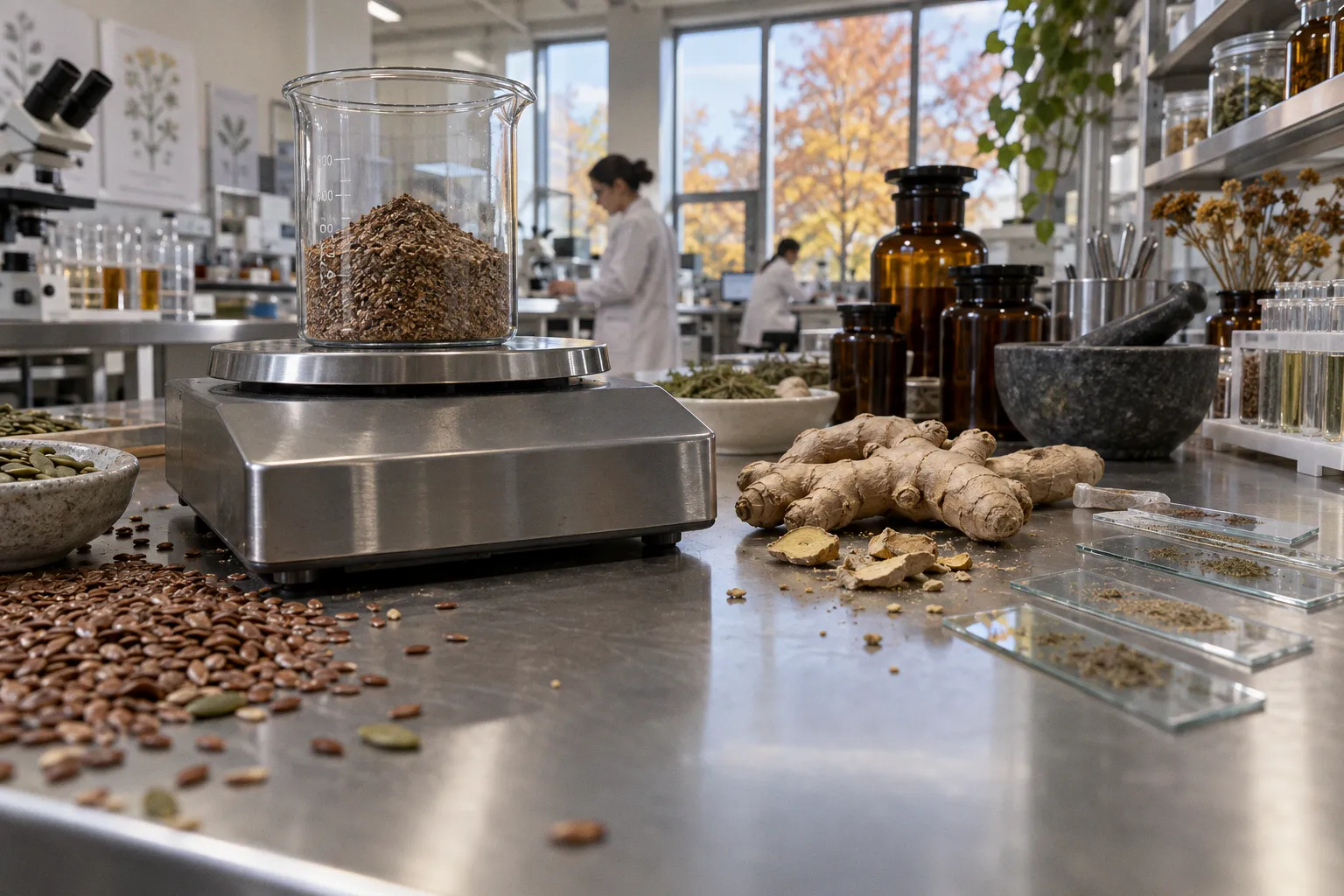
Seed cycling is a food-based nutritional protocol built around rotating four seeds across the menstrual cycle. Hormone replacement therapy, or HRT, delivers prescribed hormones at clinically defined doses to address hormone deficiency and menopausal symptoms.
Both approaches may appear in conversations about estrogen balance, PMS, perimenopause, and “hormonal support.” Their physiological reach is very different. Seed cycling adds fiber, fatty acids, lignans, zinc, vitamin E, and other nutrients to the diet. HRT changes hormone exposure more directly. One may be a reasonable supportive habit for some people; the other is a medical treatment used when symptoms, hormone changes, or long-term health considerations justify it.
I often see the confusion begin when a nutritional strategy is described as a natural alternative to medical therapy. That framing is too broad. A better comparison asks what symptom is being treated, how severe it is, where the person is in the reproductive life span, and whether the goal is cycle regulation, relief from hot flashes, protection of bone health, or support during a diagnosed endocrine condition.
Seed cycling may support the hormonal environment. HRT is designed to alter it more directly. That difference defines the practical boundary between them.
Two different mechanisms, two different levels of intervention
Seed cycling follows a phase-based rotation:
- During days 1–14, commonly described as the follicular phase, the protocol uses 1 to 2 tablespoons of ground flaxseeds and 1 to 2 tablespoons of pumpkin seeds daily.
- During days 15–28, commonly described as the luteal phase, it uses 1 to 2 tablespoons of ground sesame and 1 to 2 tablespoons of sunflower seeds daily.
For a person with a regular 28-day cycle, the schedule is easy to map. For irregular cycles, anovulation, postpartum changes, or perimenopause, the calendar becomes less reliable. Some practitioners use bleeding as the starting point, while others adapt the rotation around presumed ovulation or symptom patterns. That adaptation may be practical, but it also means the protocol is not standardized in the way a prescription is.
Flax and sesame seeds contain lignans, including secoisolariciresinol diglucoside. These plant compounds are classified as phytoestrogens because they can interact with estrogen-related pathways. Their activity is substantially weaker than the activity of prescribed body-identical hormones used in HRT or menopausal hormone therapy. They do not function as a predictable replacement dose of estradiol or progesterone.
The seeds also contribute nutrients that may matter independently of their lignan content. Flax provides alpha-linolenic acid and soluble fiber. Pumpkin and sunflower seeds provide minerals, fatty acids, protein, and vitamin E. Sesame contributes lignans and minerals. The overall effect may come from the rotation itself, from improved dietary quality, or simply from adding more seeds and fiber to meals. Current evidence does not establish that the timing of the rotation is the decisive mechanism.
HRT works through a different route. Depending on the formulation and clinical situation, it may provide estrogen alone or estrogen combined with a progestogen. People with a uterus generally need endometrial protection when systemic estrogen is prescribed; the exact regimen depends on the person’s bleeding pattern, age, medical history, and treatment goals. The purpose is not to supply a broad range of nutrients. It is to deliver hormones that can reduce symptoms associated with declining ovarian hormone production.
Seed cycling and HRT at a glance
| Parameter | Seed cycling | HRT or MHT |
|---|---|---|
| Primary format | Food-based dietary routine | Prescription hormone treatment |
| Main compounds | Lignans, fatty acids, fiber, zinc, vitamin E, other nutrients | Estrogen, with or without a progestogen |
| Typical use | Supportive nutrition for PMS, cycle concerns, or general dietary quality | Menopausal vasomotor symptoms and selected hormone-related indications |
| Hormone delivery | Indirect and variable | Direct, dose-controlled hormone exposure |
| Evidence base | Early and limited; studies are generally small | Established clinical use with guideline-based prescribing |
| Speed of symptom response | Variable and usually gradual | Often more predictable for menopause-related symptoms |
| Bone protection | Not an established substitute for medical therapy | A recognized consideration in appropriate menopausal treatment |
| Main limitation | Cannot reliably correct a significant hormone deficiency | Requires medical assessment, individualized prescribing, and monitoring |
This is why the phrase natural progesterone support vs synthetic HRT can create a misleading comparison. Seed cycling does not provide progesterone. It may be used as nutritional support during the luteal phase, but that is not equivalent to taking prescribed progesterone or a progestogen. Likewise, “synthetic HRT” is not a complete description of modern hormone therapy. Some products contain chemically identical forms of hormones produced by the body, while others use different hormone molecules or delivery systems.
The useful question is not whether one option sounds more natural. It is whether the intervention matches the physiological problem.
What the evidence says about seed cycling for cycle regulation and PCOS
The most encouraging research on seed cycling concerns menstrual regularity, PMS, and selected PCOS outcomes. A 2025 systematic review evaluated 10 studies involving 635 women. Across those studies, seed cycling was associated with improved menstrual regularity, lower PMS symptom severity, and favorable changes in sex hormone measures.
That sounds promising, but the limitations matter. The studies were small, and seed cycling was not always tested in isolation. Some interventions combined it with portion-controlled diets or broader nutritional changes. When several variables shift at once, it becomes difficult to know whether the result came from the seed rotation, the additional fiber and micronutrients, an overall reduction in energy intake, improved blood sugar regulation, or the combined pattern.
One 12-week controlled efficacy study in 60 women with PCOS reported reductions in luteinizing hormone of approximately 1.5% to 2% and reductions in follicle-stimulating hormone of approximately 1.2% to 2.5% when a portion-controlled diet was combined with seed cycling. These are measurable findings, but they should not be inflated into a claim that seed cycling treats the full metabolic and reproductive complexity of PCOS.
PCOS is not one uniform hormonal state. Some people have prominent insulin resistance, some have androgen excess, some have irregular or absent ovulation, and many have more than one of these features. A person may also have thyroid disease, hyperprolactinemia, under-fueling, chronic stress, or another reason for an irregular cycle. Seeds cannot identify or correct those causes on their own.
For cycle regulation, I view seed cycling as a low-risk dietary experiment when it is added to an adequate, varied diet and does not displace medical evaluation. It may help a person build a more consistent eating rhythm. The fiber and fat can make meals more satisfying. Replacing highly processed snacks with ground seeds may also improve the nutritional foundation of the day. Those are meaningful benefits even if the phase-based hormone theory turns out to be less important than the overall food pattern.
What a reasonable trial should measure
A person trying seed cycling for PMS or cycle regulation should track outcomes that can actually change clinical decisions:
1. Cycle timing. Record the first day of bleeding, cycle length, spotting, and whether ovulation appears to occur when relevant.
2. PMS symptoms. Note breast tenderness, mood changes, sleep disruption, cravings, headaches, bloating, and pain rather than relying on a general impression.
3. Bleeding pattern. Changes in unusually heavy bleeding, prolonged bleeding, or bleeding between periods deserve attention.
4. Digestive tolerance. Ground seeds add fiber and fat. A sudden increase may cause bloating, loose stools, or constipation if fluids and overall meal structure do not keep pace.
5. PCOS-related markers. Changes in acne, unwanted hair growth, weight, glucose measures, or ovulation should be assessed in the broader context of medical care.
Seed cycling for cycle regulation is therefore best understood as a supportive nutritional intervention, not as a diagnostic tool and not as a guaranteed method for restoring ovulation.
Why HRT has a different role in perimenopause and menopause
Perimenopause creates a particularly difficult comparison because hormone levels can fluctuate before they decline in a stable pattern. A person may have irregular bleeding, sleep disturbance, anxiety, hot flashes, night sweats, vaginal dryness, or changes in concentration. The symptoms do not always arrive together, and their intensity can vary from month to month.
Seed cycling may fit into a whole-food nutrition plan during this transition. It can provide useful fats, fiber, and minerals, and it may help some people feel more structured around meals. It may also be reasonable for mild PMS-like symptoms when there is no sign of a more serious condition. But it does not provide a controlled treatment for moderate-to-severe vasomotor symptoms.
HRT is specifically relevant when the central problem is estrogen deficiency or fluctuating estrogen during the menopausal transition. Systemic estrogen is used to reduce hot flashes and night sweats, while local vaginal estrogen may be used for genitourinary symptoms. These are not interchangeable treatments, and neither is replaced by a spoonful of ground seeds.
The comparison becomes especially important when sleep is being disrupted repeatedly. A few seeds added to breakfast may support the foundation of health, but they do not reliably address a physiological hot-flash cycle that wakes someone several times each night. Persistent sleep loss can then affect mood, appetite, glucose regulation, concentration, and the ability to exercise. In that situation, delaying effective treatment because a nutritional protocol has been presented as an equivalent alternative does not serve the person.
Medical menopausal hormone therapy may also be considered in relation to bone density and systemic hormone deficiency. Current evidence does not support using seed cycling as a substitute for HRT or MHT when medical treatment is indicated for moderate-to-severe menopausal symptoms, bone protection, or significant hormone deficiency.
That does not make HRT a universal answer. Treatment still requires an individualized discussion of symptoms, age, timing, bleeding history, migraine pattern, cardiovascular history, clotting risk, cancer history, liver health, and the presence or absence of a uterus. The route and formulation matter. A transdermal option, for example, may be considered differently from an oral option in some clinical contexts. These decisions belong in a medical consultation, not in a universal online protocol.
Nutrition can improve the foundation on which hormone health rests. It cannot always replace the hormone signal the body is no longer producing consistently.
Natural hormonal balance versus medical treatment
The phrase hormonal balance natural vs medical approach suggests a contest between two philosophies. In practice, the approaches often work best when they are separated by function rather than ideology.
A food-based strategy can improve the conditions that support hormone metabolism:
- Adequate energy intake gives the body a better foundation for reproductive signaling than chronic under-eating.
- Fiber supports regular bowel function and helps create a more consistent pattern of nutrient delivery.
- Protein at meals supports satiety and helps prevent the sharp hunger swings that can intensify PMS cravings.
- Unsaturated fats provide essential fatty acids and make meals more satisfying.
- Regular resistance and aerobic activity support glucose regulation, muscle, mood, and sleep.
- Consistent sleep and morning light help stabilize circadian rhythm, which influences appetite and stress physiology.
These measures are not a substitute for treatment when an underlying condition requires it. They are the groundwork that makes any hormonal strategy more sustainable.
HRT, by contrast, is not intended to repair every part of a person’s lifestyle. It does not replace breakfast, strength training, adequate protein, or treatment for insulin resistance. It is a targeted medical intervention. When correctly matched to the problem, it can address symptoms that nutrition alone is unlikely to control.
The strongest plan may include both. A person using HRT for menopausal vasomotor symptoms can still eat seeds, legumes, vegetables, fish, whole grains, and other nutrient-dense foods. A person with PCOS can use nutrition and movement strategies while also taking prescribed medication for insulin resistance, acne, androgen symptoms, or cycle protection when needed. There is no physiological rule that forces a choice between whole-food nutrition and conventional care.
Where seed cycling may fit
Seed cycling may be worth considering when:
- The goal is to add nutrient-dense foods rather than to treat a diagnosed hormone deficiency.
- PMS symptoms are mild or moderate and the person is able to track them without dismissing significant changes.
- The protocol fits comfortably into existing meals.
- There is no seed allergy, significant digestive intolerance, or reason to restrict fat or fiber.
- The person understands that evidence is preliminary and that results may come from overall diet quality rather than phase timing.
It is less suitable as a stand-alone plan when periods have stopped unexpectedly, bleeding is unusually heavy, pelvic pain is severe, pregnancy is possible, or symptoms are rapidly worsening. Those patterns need assessment before experimenting with a wellness protocol.
Where medical care moves to the foreground
A clinician should be involved when symptoms include persistent hot flashes, night sweats that disrupt sleep, vaginal or urinary symptoms, recurrent missed periods, very heavy bleeding, new bleeding after menopause, infertility, or significant mood changes. PCOS also deserves a full assessment rather than a narrow focus on estrogen. Depending on the presentation, evaluation may include pregnancy testing, thyroid assessment, prolactin, androgen-related testing, glucose markers, blood counts, or imaging.
This is not alarmist. It is a matter of matching the level of investigation to the symptom pattern. Hormone symptoms are often treated too narrowly because the word “balance” sounds like an explanation by itself. It is not. A symptom is a signal, and its context matters.
The practical seed cycling protocol
If you decide to try seed cycling, keep the protocol simple enough to follow and transparent enough to evaluate. Use ground seeds because whole flaxseeds may pass through the digestive tract with less access to their nutrients. Grind small amounts at a time and store them in a way that protects freshness, particularly for flax.
A basic schedule looks like this:
| Cycle phase | Common timing | Seeds | Daily amount |
|---|---|---|---|
| Follicular | Days 1–14, beginning with the first day of bleeding | Ground flaxseeds and pumpkin seeds | 1 to 2 tablespoons of each |
| Luteal | Days 15–28, traditionally after presumed ovulation | Ground sesame and sunflower seeds | 1 to 2 tablespoons of each |
The listed amount is the standard protocol, but beginning at the lower end is sensible. Stir seeds into yogurt, oatmeal, soup, a smoothie, or a grain bowl. Pumpkin and sunflower seeds can also be used as toppings. The best delivery method is the one that becomes part of an ordinary meal rather than a daily ritual that requires unusual effort.
If your cycle is longer or shorter than 28 days, do not force it into an artificial calendar. A clinician or qualified practitioner can help you decide whether tracking ovulation is useful and whether the second phase should be based on observed ovulation rather than a fixed day. In perimenopause, cycles may be too irregular for a phase-based protocol to carry much physiological meaning. It may still function as a nutritious seed routine, but that is a different claim.
Pay attention to the rest of the plate. A tablespoon of seeds is not a complete intervention if meals remain low in protein, vegetables, or total energy. For PCOS, a balanced meal pattern that reduces large glucose swings may matter more than whether flax appears before or after pumpkin seeds. For PMS, steady meals, adequate carbohydrates, sleep, and magnesium-rich foods may be relevant alongside the seed routine.
Also consider medication timing and individual restrictions. Seeds are foods, but foods can still affect digestion, fullness, allergies, and nutrient intake. Anyone taking medication for a diagnosed condition should discuss major dietary changes with a clinician, particularly if the diet is being used to avoid prescribed treatment.
How to compare outcomes without overstating the evidence
The phrase seed cycling vs hormone replacement therapy efficacy needs a defined endpoint. Efficacy for what?
For mild PMS, seed cycling may be a reasonable low-cost experiment, although evidence remains limited. For cycle regulation in PCOS, early studies are encouraging but do not establish seed cycling as a standalone treatment. For hot flashes and night sweats, HRT has a much clearer therapeutic role. For bone density preservation in the setting of menopausal hormone loss, seed cycling cannot be treated as an equivalent.
A useful comparison is to place the intervention beside the actual goal:
| Goal | Seed cycling | HRT/MHT |
|---|---|---|
| Add fiber, healthy fats, and minerals | Directly relevant | Not the purpose of treatment |
| Mild PMS support | May be considered as part of nutrition care | Usually not the first comparison unless another indication exists |
| Irregular cycles in PCOS | May support a broader plan; evidence is preliminary | Does not treat the underlying PCOS mechanism in the same way |
| Moderate-to-severe hot flashes | Not an established substitute | A clinically relevant treatment option |
| Night sweats and sleep disruption | May support general health but is unlikely to be predictable | Can directly address vasomotor symptoms when appropriate |
| Vaginal dryness or genitourinary symptoms | Not an equivalent treatment | Local or systemic medical options may be considered |
| Bone protection during menopause | Not established as a replacement | May be part of a medically supervised strategy |
| Nutritional quality | Central | Complementary rather than primary |
This approach also reduces the pressure to choose a single identity: the person who eats naturally or the person who accepts medical care. Hormone health is not improved by making treatment decisions into moral statements. It is improved by identifying the problem accurately and selecting the least burdensome option that can realistically address it.
A measured way to put the strategy into practice
I would approach seed cycling in four steps.
First, define the symptom. Is the goal fewer premenstrual headaches, more regular bleeding, improved satiety, or relief from hot flashes? A vague goal produces a vague result.
Second, establish a nutritional foundation before adding a phase-based rule. Aim for regular meals, enough protein, fiber-rich carbohydrates, vegetables, and fats that you tolerate well. Seeds should strengthen that pattern, not become a substitute for it.
Third, track the response for roughly three menstrual cycles when cycles are present and reasonably trackable. Record symptoms and bleeding rather than relying on memory. If there is no meaningful improvement, the answer may be that the timing theory is not relevant to your physiology, or that another cause needs attention.
Fourth, escalate care when the symptom pattern exceeds what nutrition can reasonably manage. Severe vasomotor symptoms, significant menstrual disruption, infertility, unexplained bleeding, and suspected endocrine disorders need clinical evaluation. A nutritional protocol can continue as supportive care if it suits you, but it should not delay diagnosis or effective treatment.
The comparison between seed cycling and HRT is therefore not a contest between natural and medical healing. Seed cycling offers a structured way to increase whole-food nutrients, with early evidence for possible benefits in PMS and PCOS. HRT offers direct, prescribed hormone support with a clearer role in menopausal vasomotor symptoms and selected systemic effects. Their mechanisms, evidence, and appropriate uses do not match.
For many people, the sensible path is layered: build the daily foundation with food, movement, sleep, and stress support, then use medical treatment when the body needs a stronger or more specific signal. That is not a compromise. It is a more accurate form of individualized hormone care.