Chasteberry dosage for hormonal balance and cycle support
The supplement industry’s relationship with Vitex agnus-castus is a textbook case of dose inflation.
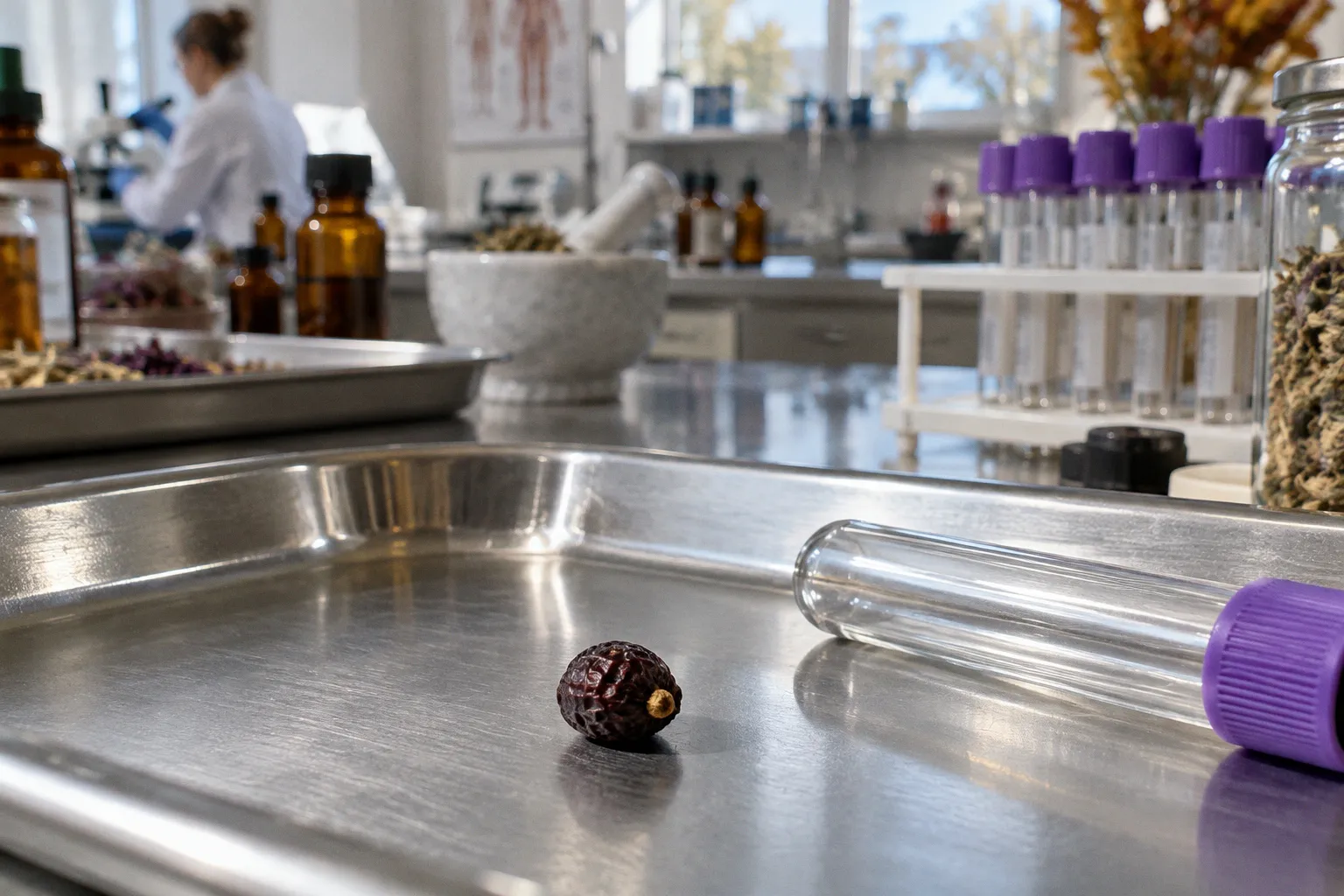
Patients arrive at consultations carrying bottles labeled 500 mg, 800 mg, even 1000 mg of “chasteberry extract,” convinced that more milligrams must mean more hormonal correction. The clinical literature does not support that arithmetic.
In a 2012 multi-arm dose-ranging study of the standardized extract Ze 440, researchers compared 8 mg, 20 mg, and 30 mg daily over three menstrual cycles. The 20 mg dose performed better than placebo, while the 30 mg dose offered no additional benefit over 20 mg. More was not better. It was simply more extract.
Vitex agnus-castus, also called chaste tree, is a pharmacologically active botanical from the Lamiaceae family. It is not a food-grade herb to sprinkle generously into a supplement routine. Its dopaminergic activity at the level of the anterior pituitary is dose-sensitive and receptor-mediated. Treating it like a multivitamin—escalating the quantity because the menstrual cycle remains irregular after six weeks—can produce frustration, side effects, and a therapeutic failure that gets blamed on the plant rather than on the dosing protocol.
The useful question is not how many milligrams of chasteberry a person can tolerate. It is which preparation is being used, what dose has actually been studied, how long the intervention needs to run, and whether the person’s symptoms fit the mechanism of the herb in the first place.
Clinical Dosing Standards for Standardized Extracts
The most rigorously studied commercial preparation is the standardized dry extract Ze 440, derived from the dried fruit of Vitex agnus-castus and adjusted to a defined constituent profile. The 2012 study associated with Schellenberg and colleagues is best understood as a multi-arm dose-ranging study rather than a single-arm comparison. Its purpose was to examine how different daily doses performed across several groups and across three consecutive menstrual cycles.
The study compared 8 mg, 20 mg, and 30 mg of Ze 440, with a placebo group. The 20 mg arm showed meaningful improvement in premenstrual symptoms compared with placebo. Increasing the dose to 30 mg did not produce an additional advantage over 20 mg. That finding is clinically more useful than a simple statement that a higher dose was tested: it suggests that, for this standardized extract and this indication, the response reached a practical plateau at 20 mg.
That does not mean that every Vitex product should be dosed at exactly 20 mg. A number printed on the front of a bottle has little meaning without the extract ratio, plant part, standardization marker, and manufacturer’s specifications. “500 mg chasteberry extract” can describe a concentrated extract, a dry equivalent, or a product that is using the word extract loosely for powdered fruit. These are not interchangeable preparations.
For standardized extracts used in the context of PMS symptoms and cycle support, a daily range around 20–40 mg is often encountered. The lower end has the clearest relevance to the Ze 440 dose-ranging evidence. Some products use a much larger milligram number because they are standardized differently, while others list the weight of the original plant material rather than the final concentrated extract.
A practical comparison looks like this:
| Preparation type | Commonly encountered daily amount | How to interpret it |
|---|---|---|
| Ze 440 standardized extract | 20 mg | Clinical reference dose in the multi-arm dose-ranging research; 30 mg showed no additional benefit over 20 mg |
| General standardized fruit extract | About 20–40 mg | A broad reference range, not a universal prescription |
| Dry extract standardized to 0.5% agnuside | About 175–225 mg | A marker-constituent standardization; not weight-equivalent to Ze 440 |
| Whole dried berry or powdered fruit | About 160–240 mg | A less concentrated and less predictable preparation |
| Higher-dose research formulations | Up to about 400 mg in selected protocols | Not a general recommendation for routine PMS treatment |
The table is a way to prevent a common category error. The figures cannot be compared as if they represent the same chemical material. Twenty milligrams of one standardized extract may deliver a very different constituent profile from 200 mg of a differently standardized dry extract, and neither figure can be read as equivalent to 200 mg of ground berry.
For a person using a well-characterized standardized extract for PMS-related symptoms or cycle support, 20 mg once daily is a rational evidence-based starting point. A clinician may consider a different amount when the product uses another standardization system, when tolerability is a concern, or when the indication differs. The dose should not be increased automatically because the first cycle was disappointing.
Why the label matters more than the headline milligram number
A reliable label should identify the botanical name, the plant part, the extract form, and, where applicable, a marker compound or extract ratio. Without that information, the stated dose is difficult to interpret.
The following distinctions matter:
- Plant powder is the dried and milled fruit. Its constituents are present in a relatively unprocessed matrix, but the amount of active compounds can vary.
- Dry extract has been produced by extracting the fruit and removing the solvent. Its final concentration depends on the extraction process and the ratio of starting material to extract.
- Standardized extract is adjusted or selected to provide a more consistent level of specified marker constituents or a defined overall profile.
- Tincture is a liquid extract whose strength depends on the plant-to-menstruum ratio, solvent composition, and serving volume.
A bottle that lists only “chasteberry 500 mg” does not provide enough information to place the product on the same dosing scale as Ze 440. This is why supplement shopping can create the illusion of a high-dose intervention when the actual preparation is simply less concentrated.
Navigating Tinctures and Raw Berry Formulations
Not every patient takes Vitex in a capsule. Liquid preparations—hydroalcoholic tinctures and glycerites—remain common in naturopathic practice and in over-the-counter botanical dispensaries. Their dosing is volumetric rather than gravimetric, and the conversion is not intuitive.
A commonly used tincture guideline is 20–40 drops, taken up to three times daily, or a single morning dose of up to 5 mL, approximately one measured teaspoon. A 1:5 tincture taken at that volume may correspond roughly to 1 g of crude herb equivalent, but the estimate is only an approximation. The actual constituent concentration depends on the extraction ratio, the plant-to-menstruum relationship, the alcohol percentage, and the quality of the source material.
That is why drops should not be converted casually into milligrams of standardized extract. A drop is a volume, not a measure of active constituents. Two tinctures can have the same serving size and deliver different amounts of the compounds associated with Vitex activity.
Glycerites require the same caution. They may be more acceptable to people avoiding alcohol, but the absence of alcohol changes the extraction profile and does not make the product pharmacologically identical to an alcohol-based tincture. The label should state the extraction strength and recommended serving rather than leaving the user to infer equivalence from the size of the bottle.
Raw berry formulations sit at the other end of the spectrum. Capsules containing ground dried fruit provide the whole plant matrix but lack the concentration and batch-to-batch consistency of a well-defined standardized extract. A daily amount in the range of 160–240 mg may appear on labels for powdered fruit preparations, but the figure should be interpreted as a product-specific amount, not as a direct substitute for 20 mg of Ze 440.
The variability has several consequences:
- The amount of agnuside and other iridoid glycosides may differ between products.
- Diterpene content may vary depending on the fruit source and manufacturing process.
- A larger capsule number does not necessarily mean a stronger or more effective intervention.
- A product may be difficult to compare with clinical research if its extract specifications are not disclosed.
For patients choosing between forms, the decision is rarely about efficacy alone. Adherence, gastrointestinal tolerance, taste, cost, and concurrent medications often determine whether a protocol is sustainable. A standardized extract is usually the most predictable form. A tincture permits more flexible adjustment of serving volume. A raw berry capsule may be familiar and inexpensive, but it is generally harder to map onto the clinical evidence.
None of these forms is automatically interchangeable. Rotating between a standardized extract, a tincture, and powdered fruit in the middle of a treatment period creates unnecessary uncertainty. If symptoms change, it becomes difficult to tell whether the change came from the botanical itself, a different constituent profile, a different dose, or the natural variation of the menstrual cycle.
The first dosing question is not “How many milligrams?” It is “Milligrams of what preparation?”
Mechanism of Action: How Vitex Influences Prolactin and LH
The pharmacology of Vitex is not mystical, and the plant does not contain progesterone or estrogen that can simply be supplied to the body. Its proposed activity is regulatory rather than substitutive.
The diterpene fraction, including compounds such as rotundifuran and related clerodane-type constituents, has dopaminergic activity at the level of the anterior pituitary. The relevant model involves interaction with dopamine D2 receptors and subsequent effects on prolactin secretion. This is a receptor-level pharmacological process, not a general claim that the herb “balances hormones” in an unrestricted sense.
Prolactin has a legitimate role in reproductive physiology, but persistent elevation or altered timing can interfere with the signaling environment required for normal ovulation and luteal function. In a person whose symptoms are related to this pattern, reducing excessive prolactin signaling may support more orderly communication between the hypothalamus, pituitary gland, and ovaries.
The downstream pathway is often described as a prolactin–LH–progesterone relationship:
1. Dopaminergic activity influences prolactin release from the anterior pituitary.
2. Changes in prolactin signaling may affect the rhythm of gonadotropin release.
3. More stable luteinizing hormone signaling can support corpus luteum function.
4. Improved luteal function may contribute to more consistent progesterone production after ovulation.
5. Symptoms such as breast tenderness, premenstrual irritability, or cycle irregularity may improve when the underlying pattern is responsive.
This is not a promise that Vitex will raise progesterone in every person who takes it. If the dominant problem is anovulation, thyroid dysfunction, a structural gynecological condition, significant energy deficiency, or an endocrine disorder requiring medical treatment, a dopaminergic botanical may not address the main cause.
The mechanism also explains why the herb should not be treated as a rapid symptomatic analgesic. A receptor-mediated intervention that influences pituitary signaling does not function like an immediate pain reliever. The clinical response may depend on repeated daily exposure and the gradual reorganization of an endocrine feedback loop.
What “hormonal balance” should mean in this context
The phrase “hormonal balance” is used so broadly in supplement marketing that it can conceal important differences between symptoms. Breast tenderness before menstruation, a short luteal phase, irregular ovulation, heavy bleeding, acne, premenstrual mood changes, and elevated prolactin are not one condition.
Vitex has the strongest practical rationale when the goal is support for PMS-related symptoms or cycle patterns that fit its dopaminergic and luteal-phase model. It should not be positioned as a universal treatment for every reproductive or endocrine complaint.
That distinction changes how results are evaluated. A person tracking breast tenderness and irritability may notice a meaningful shift even if cycle length remains unchanged. Another person may have a regular cycle but persistent pelvic pain, which points toward a different clinical question. The herb’s usefulness depends on matching the intervention to the symptom pattern rather than attaching it to the vague objective of “balancing hormones.”
The Three-Month Rule: Evaluating Efficacy and Consistency
The most common error in chasteberry use is premature discontinuation. People often expect cycle regularization within one or two cycles, especially when the product label uses confident language about hormonal support. That expectation is usually too aggressive.
A minimum evaluation period of three menstrual cycles is more realistic, and some clinical protocols extend to three to six months when the product is tolerated and the person is being monitored appropriately. The reason is not that the herb needs a mystical accumulation period. It is that endocrine feedback, ovulation patterns, luteal function, and subjective symptoms do not always shift at the same speed.
The Ze 440 dose-ranging research followed participants across three consecutive cycles. That design matters: it recognizes that a single cycle contains too much biological variation to serve as a reliable verdict. Stress, sleep disruption, illness, travel, changes in training load, under-fueling, and ordinary cycle variability can all affect symptoms independently of the intervention.
A useful evaluation period includes more than a general impression of feeling better or worse. Before starting, a person can record:
- Cycle length and the approximate timing of ovulation, if it is being tracked.
- Premenstrual breast tenderness, bloating, headache, or pelvic discomfort.
- Mood changes, irritability, anxiety, or sleep disruption in the luteal phase.
- Bleeding pattern, including unexpected spotting or a significant change in flow.
- Missed doses and changes in the product or serving size.
- New medications, hormonal contraception, major dietary changes, or unusually high stress.
This is not a demand for obsessive tracking. It is a way to distinguish a sustained pattern from one unusually difficult or unusually easy month. A simple daily rating scale can be more informative than memory, particularly when symptoms are cyclical and the interval between one menstrual period and the next is several weeks.
Daily adherence matters more than finding a perfect hour. Once-daily morning dosing with a standardized extract is a practical routine, while a tincture may be divided across the day according to the product’s directions. The precise timing is less important than taking the same preparation consistently enough to evaluate it.
Missed doses do not necessarily create danger, but frequent omissions weaken the experiment. So does changing from 20 mg of a standardized extract to a high-volume tincture because the first few weeks did not produce an immediate effect. A protocol cannot be evaluated cleanly if both the form and the dose are moving targets.
When a lack of response is informative
If a well-characterized preparation is taken consistently for approximately three cycles without meaningful improvement, increasing the dose indefinitely is not the logical next step. The absence of benefit may indicate that:
- The symptoms are not driven by a pattern that responds to Vitex.
- The product is poorly standardized or does not resemble the preparation used in the research.
- The primary issue is not pituitary or luteal signaling.
- Another condition is contributing to the symptoms.
- The dose is not tolerated well enough to maintain consistent use.
- The original symptom pattern was too nonspecific to evaluate the intervention properly.
A non-response is clinical information. It should prompt reassessment rather than a race toward a larger number on the label.
Safety Protocols and Contraindications for Herbal Intervention
Vitex is often described as gentle because many people tolerate it without major problems. That description should not be confused with pharmacological neutrality. The herb acts on a real receptor system, and that system intersects with important drug classes and physiological states.
Pregnancy and lactation
Chasteberry should not be self-prescribed during pregnancy. It should also be avoided during lactation unless a qualified clinician has specifically advised its use. Prolactin is central to milk production, and a botanical with dopaminergic effects is not an appropriate casual addition during a period when reproductive and lactation physiology is changing rapidly.
Anyone who suspects pregnancy should stop self-directed use and discuss the situation with a healthcare professional. The same applies when fertility treatment is underway.
Hormonal contraception and hormone therapy
Concurrent use with hormonal contraceptives or hormone replacement therapy is not a situation for improvisation. The concern is not that Vitex is guaranteed to cancel the effect of a contraceptive. Rather, the clinical purpose and pharmacodynamic effects of the botanical may not align with the hormonal regimen, and the evidence for combining them is not robust enough to justify casual experimentation.
The same caution applies to medications prescribed for cycle control, fertility support, endometriosis-related symptoms, or menopausal symptoms. A clinician or pharmacist should review the complete regimen, including nonprescription supplements.
Dopaminergic medications
Because Vitex may influence dopaminergic signaling, caution is warranted with medicines that act on dopamine pathways. This includes some antipsychotic drugs, medications used in Parkinson’s disease, and certain antiemetics such as metoclopramide-type agents.
The direction of the interaction is not always predictable from a supplement label. One substance may increase dopaminergic activity while another blocks dopamine receptors, but the practical outcome depends on the drug, dose, indication, and the person’s underlying condition. This is a medication-review issue, not something to solve by spacing the products a few hours apart.
Hormone-sensitive conditions and pituitary disease
People with a history of hormone-sensitive cancer should obtain individualized advice from their oncology or endocrine team. The available clinical information is limited, and a theoretical mechanism is not a substitute for condition-specific guidance.
Known pituitary disorders, including prolactinomas and other anterior pituitary pathology, require medical evaluation before introducing a dopaminergic botanical. A supplement should not be used to self-treat an unexplained prolactin elevation, visual changes, persistent headaches, or a major change in menstrual function.
Side effects and warning signs
At commonly used doses, reported adverse effects can include headache, nausea, gastrointestinal upset, acne or skin reactions, dizziness, and changes in bleeding or menstrual timing. Some people notice a transient change during the first cycles; others find that the product is simply not tolerable.
Persistent or worsening symptoms should not be rationalized as evidence that the herb is “working.” Stop the product and seek medical advice if there is a significant allergic reaction, severe headache, visual disturbance, unusual bleeding, marked mood change, or symptoms suggestive of pregnancy.
Medical assessment is also warranted for very heavy bleeding, bleeding between periods that persists, sudden cycle changes, severe pelvic pain, fainting, or a new breast symptom. Those presentations need a diagnosis before a supplement protocol is adjusted.
Putting the Dose Into Practice
A sensible approach begins with the preparation rather than the marketing claim.
1. Identify the exact form. Confirm whether the product contains powdered fruit, a dry extract, a tincture, or a named standardized preparation.
2. Read the serving instructions and specifications. Look for the botanical name, plant part, extract ratio, and marker standardization where available.
3. Choose one preparation. Avoid combining several Vitex products simply to reach a larger milligram total.
4. Use a conservative, evidence-aligned starting point. For a Ze 440-type standardized extract, 20 mg daily is the clearest clinical reference.
5. Allow enough time for evaluation. Assess the response over at least three menstrual cycles when the product is tolerated and there are no safety concerns.
6. Track the symptom that matters. Decide in advance whether the target is breast tenderness, mood symptoms, cycle regularity, luteal-phase signs, or another defined feature.
7. Review the result instead of escalating automatically. If there is no meaningful improvement, reconsider the diagnosis, product quality, and appropriateness of the intervention.
This sequence is deliberately less dramatic than the usual supplement narrative. There is no advantage in turning a moderate botanical protocol into a high-dose project before the original dose has been given a fair trial.
Conclusion
Chasteberry is a pharmacologically active botanical with a plausible mechanism, a clinically studied preparation, and a dose-response pattern that does not reward automatic escalation. The 2012 Ze 440 research was a multi-arm dose-ranging study comparing 8 mg, 20 mg, and 30 mg daily over three menstrual cycles. The 20 mg dose performed better than placebo, while 30 mg offered no additional benefit over 20 mg.
That finding supports 20 mg of a comparable standardized extract as a rational reference dose for PMS-related symptoms and cycle support. It does not mean that every product labeled “chasteberry” can be dosed by the same number. Tinctures operate on a volumetric scale, powdered fruit has a different concentration profile, and differently standardized dry extracts cannot be compared by weight alone.
Twenty milligrams of a well-characterized standardized extract, taken consistently and evaluated across at least three menstrual cycles, is a protocol. Doubling the dose simply because the first month was inconclusive is not.
If a suitable preparation produces no meaningful change after a consistent trial, the more useful conclusion is often that Vitex is not the right intervention for that symptom pattern. The answer may lie in a different botanical, a medical evaluation, a medication review, or a closer look at ovulation, thyroid function, prolactin, energy availability, and the broader menstrual context.
Used within its evidence window and safety framework, Vitex agnus-castus can be a reasonable option for selected PMS and cycle-related concerns. Used as a universal hormone-balancing supplement—or pushed upward in milligram increments until something happens—it becomes an expensive and poorly controlled experiment with a real pharmacological profile.