Herbal tincture potency: why efficacy declines over time
A tincture can remain clear, aromatic, and apparently unchanged while the compounds that made it useful are gradually altered. That is why appearance alone is a poor measure of herbal tincture potency loss over time.
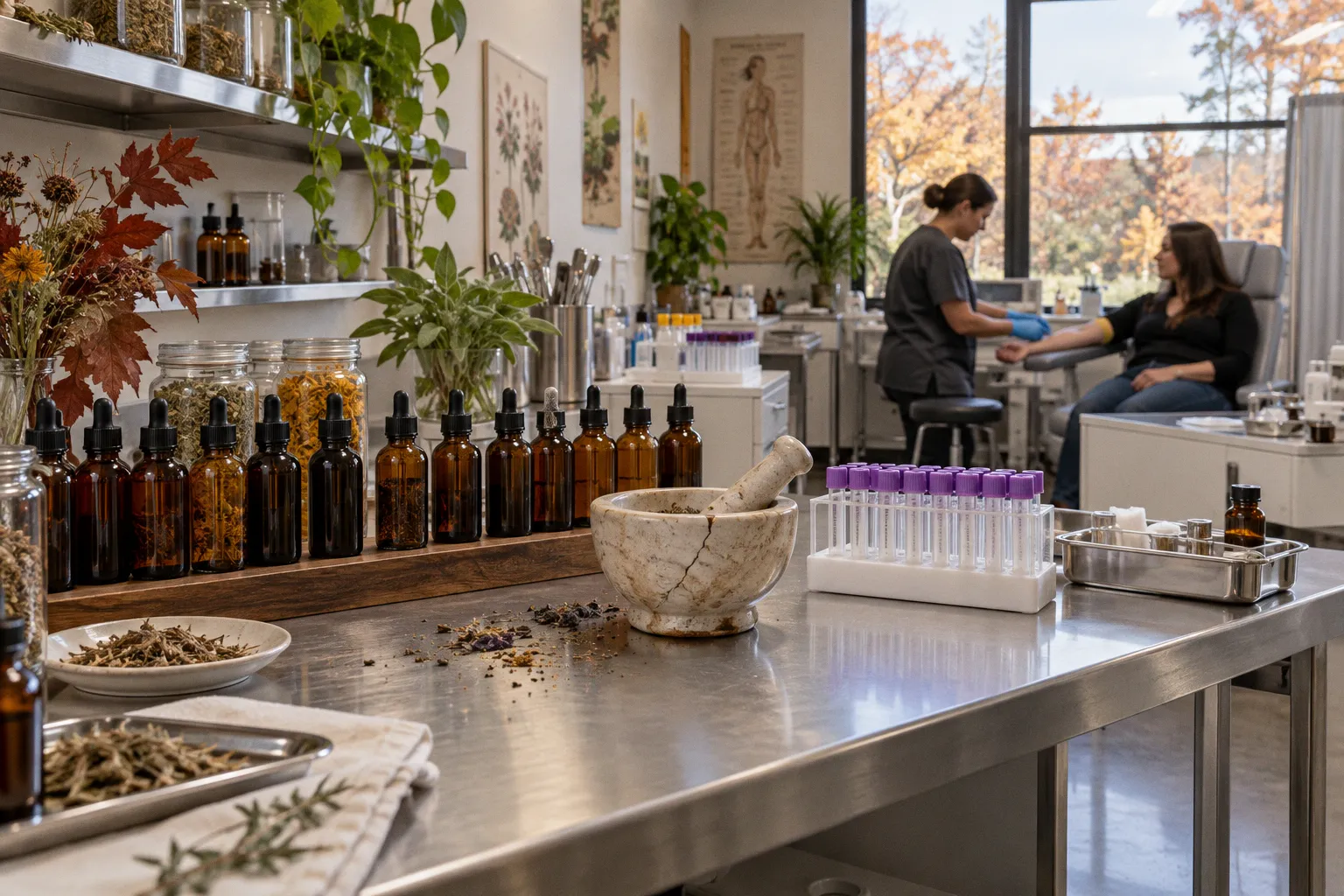
The important distinction is between microbial spoilage and chemical aging. A properly prepared alcohol extract may remain resistant to microbial growth for a long period, especially when the alcohol concentration, container, seal, and storage conditions are appropriate. That does not mean every active constituent remains unchanged. Light, heat, oxygen, moisture, and repeated opening can all shift the chemistry of a botanical extract without producing obvious visual warning signs.
A tincture is not a frozen snapshot of the plant. It is a living chemical system, and its stability depends on the plant material, the extraction method, the solvent, the concentration of constituents, the packaging, and the environment in which the bottle is kept.
The Chemistry of Degradation: Why Potency Wanes While Safety Remains
Herbal tinctures are concentrated liquid extracts made by transferring plant constituents into a solvent, most commonly a mixture of ethanol and water. The solvent makes certain compounds available in liquid form and, in the case of alcohol-based preparations, can limit microbial growth. It does not prevent every chemical reaction from continuing.
Plant extracts contain many different families of compounds. Their stability is not uniform, and a tincture made from one herb cannot automatically be assigned the same useful life as a tincture made from another.
Flavonoids and anthocyanins contribute to the color and biological activity of many plants. These compounds can be sensitive to light, oxygen, acidity, and temperature. Their degradation may involve oxidation, changes in molecular structure, or reactions with other constituents in the extract. A darker or faded color can sometimes signal chemical change, but color is not a complete potency test: some important changes occur before the bottle looks different.
Alkaloids form another broad and chemically diverse group. Isoquinoline, indole, and tropane alkaloids occur in different medicinal species and do not all behave the same way in solution. Some are relatively stable under particular conditions; others are more vulnerable to light, pH changes, oxygen, or interactions with the surrounding extract.
Valerenic acids belong to a different class. They are sesquiterpenes associated with valerian preparations, not alkaloids. Like other terpene constituents, they may be affected by oxidation and by the loss or alteration of volatile components. That distinction matters because calling every pharmacologically relevant plant compound an alkaloid obscures the actual stability question: each constituent has its own chemistry.
Volatile oils introduce another complication. Some compounds evaporate when a bottle is poorly sealed or repeatedly opened. Others oxidize when exposed to air. A tincture may therefore lose part of its characteristic aroma while still looking clear. In aromatic plants, a change in smell can be a useful warning, but an unchanged smell does not prove that the full phytochemical profile is intact.
The result is a gradual and uneven process. One compound may decline while another remains comparatively stable. The extract may retain some of its original activity without delivering the same balance of constituents it had when freshly prepared. Potency loss is therefore better understood as a shift in the chemical profile than as a single switch from effective to ineffective.
A clear tincture may still be chemically older than it looks.
This is also why a universal percentage of annual potency loss is misleading. There is no single decay rate that applies to all tinctures. The plant species, the part of the plant used, the solvent ratio, the concentration, the closure, the amount of air in the bottle, and the storage environment all change the outcome.
Safety and efficacy are related but separate questions. An extract can lose some of its intended activity without becoming acutely dangerous. Conversely, an old bottle should not automatically be called safe simply because it is clear. Contamination, accidental dilution, an unreliable seal, or an inappropriate formulation can create risks that have nothing to do with the normal chemical aging of a well-made alcohol tincture.
The Impact of Environmental Stressors on Phytochemical Stability
The main factors affecting botanical extract stability are familiar: light, heat, oxygen, moisture, and handling. What makes them easy to underestimate is that they often work together.
Light
Ultraviolet light and strong visible light can accelerate photochemical reactions in plant compounds. Pigments such as anthocyanins are especially visibly affected, but the concern is not limited to colored constituents. Clear glass on a sunny windowsill provides little protection, even if the room itself does not feel hot.
Amber or otherwise light-protective packaging reduces exposure. It does not make the contents permanently stable, but it removes one major source of stress. A dark cupboard is preferable to a bright shelf, and a bottle should not be left where direct sunlight reaches it for part of the day.
A change in color is worth noticing, but it should not be treated as a precise measurement. Some extracts naturally deepen in color as they age, while others show little visible change even when volatile or oxidation-sensitive compounds have shifted.
Heat
Heat generally speeds chemical reactions. Repeated warming and cooling can also stress the closure and encourage condensation or changes in the headspace. A bottle stored near a cooker, radiator, hot water pipe, or in a vehicle is exposed to a less stable environment than one kept in a consistently cool cupboard.
The practical goal is not to create a laboratory-perfect temperature. It is to avoid sustained heat and large temperature swings. A stable household storage area is usually more useful than a place that becomes hot during the day and cools sharply at night.
Refrigeration can be appropriate for some preparations, especially certain glycerites, but it is not a universal solution. A cold bottle taken in and out of the refrigerator may collect condensation around the cap. Frequent opening while the container is still cold can also introduce moisture. The storage instructions supplied by the maker should take priority over a general assumption that colder is always better.
Oxygen and headspace
Oxygen is introduced every time a bottle is opened, but the practical importance depends on the formulation and the packaging. A well-sealed container limits exchange with outside air. As the liquid level falls, the volume of air above the extract increases, giving oxidation-sensitive constituents more contact with oxygen.
This does not mean that every half-empty bottle suddenly becomes unusable. It means that repeated opening, a loose cap, and a large headspace create conditions that can accelerate change. A smaller container may be useful when only a small amount remains, provided the transfer is made carefully and the new container is clean, compatible, and well sealed.
Dropper bottles also deserve attention. The bottle may be made of amber glass while the dropper assembly contains materials that age differently or do not form a perfect barrier to air. Packaging is part of the formulation’s stability system, not a decorative choice.
Moisture and contamination
Water is often part of a tincture’s intended solvent system, so moisture alone does not indicate that a preparation has failed. The concern is uncontrolled moisture entering the bottle, particularly when it is combined with repeated handling or a weakened preservative system.
Do not put a wet dropper back into the bottle. Avoid touching the opening with fingers or other objects. Keep the cap and threads clean and dry. These habits reduce the chance of introducing contaminants and help preserve the seal.
A useful storage assessment looks at the whole history of the bottle rather than one isolated sign:
- Was it kept in protective packaging or exposed to light?
- Was the cap closed firmly after each use?
- Was it stored in a hot, damp, or frequently changing environment?
- Was the dropper handled cleanly?
- Has the smell, color, texture, or taste changed noticeably?
- Is there cloudiness, sediment, gas formation, leakage, or visible growth that was not present before?
No single observation can establish potency. A clean appearance does not prove that sensitive constituents remain at their original level, and a darker color does not automatically mean the preparation is unsafe. When several warning signs appear together, however, the bottle should not be treated as equivalent to a fresh, well-stored extract.
Comparative Shelf Life: Alcohol Tinctures vs. Glycerites and Vinegars
The solvent is one of the most important variables in a liquid herbal preparation. It determines which compounds are extracted, how well the medium resists microbial growth, how the product responds to temperature and oxygen, and how long the formulation can remain consistent.
Alcohol tinctures
Ethanol-water mixtures are widely used because they can extract a broad range of plant compounds and provide useful protection against many microorganisms. The actual preservative effect depends on the alcohol concentration, water activity, formulation, packaging, and handling. A product with a higher alcohol content is not automatically stable forever, and a low-alcohol preparation should not be judged by the same standard as a stronger tincture.
Alcohol can slow microbial growth without stopping oxidation, photodegradation, or the loss of volatile constituents. It is therefore possible for an alcohol tincture to remain microbiologically stable while becoming chemically different from the original extract.
Commercial alcohol tinctures may carry a manufacturer’s best-before date or storage guidance. Those details are more meaningful when they are tied to a particular formula and container rather than borrowed from a general rule about all tinctures. If no date is provided, the absence of visible spoilage is not proof that potency is unchanged.
Glycerites
Glycerin-based extracts are often chosen by people who avoid alcohol or prefer a sweeter preparation. Glycerin can contribute to preservation, but its protective effect depends on its concentration and on the rest of the formula. A glycerite is not simply an alcohol tincture with the ethanol removed.
Glycerites may be more sensitive to handling, dilution, and storage conditions than a well-formulated alcohol extract. Some become darker, thicker, or more syrup-like over time. Those changes can be useful clues, but they do not provide a reliable potency measurement on their own.
Because glycerites vary considerably in composition, a maker’s storage instructions matter. A product intended to be refrigerated should not be kept indefinitely in a warm cupboard, and a preparation sold for rapid use should not be assumed to have the same stability profile as a commercially validated product.
Vinegar extracts
Vinegar-based preparations are acidic, but acidity does not make them chemically or microbiologically invulnerable. The protective effect depends on the acid concentration, the water content, the plant material, the container, and the way the preparation is handled.
Over time, plant compounds may alter the aroma, color, taste, and composition of a vinegar extract. The acid can also be diluted or buffered by material transferred from the plant, although this process should not be described as a universal esterification reaction. The more practical point is simpler: acidity is not a substitute for formulation-specific stability testing.
Vinegar extracts are generally better treated as preparations for comparatively prompt use unless the manufacturer provides clear storage and dating information. Refrigeration may help some formulas, but it cannot compensate for contamination or poor sealing.
| Solvent base | What it contributes | Main limitations |
|---|---|---|
| Ethanol and water | Broad extraction range and, at an appropriate concentration, resistance to microbial growth | Does not prevent oxidation, light damage, or loss of volatile compounds |
| Glycerin and water | Alcohol-free format and a sweet, viscous liquid | Stability depends strongly on glycerin concentration, dilution, handling, and formulation |
| Vinegar | Acidic medium that can extract selected constituents | Acidity does not guarantee long-term chemical stability or protection from contamination |
There is no defensible universal multiplier for the shelf life of one base compared with another. An alcohol tincture may remain consistent longer than a glycerite in one formulation, while the difference may be smaller or behave differently in another. The comparison must be made between actual products, not between solvent categories in the abstract.
The solvent sets the starting conditions; the plant and the packaging determine how those conditions age.
Optimizing Storage Protocols to Preserve Active Constituents
Good storage cannot stop degradation, but it can reduce the stresses that accelerate it. The most useful protocol is uncomplicated:
Protect the extract from light
Keep the bottle in its original light-protective container whenever possible. If a clear bottle is supplied, place it in a closed cupboard or another location away from direct and strong ambient light. Do not rely on a decorative box that is routinely left open on a bright counter.
Keep the temperature stable
Choose a cool, dry place with limited temperature fluctuation. Avoid windowsills, vehicles, bathrooms with frequent steam, and cupboards directly above or beside a heat source. The aim is stable household storage, not a promise that a refrigerator will preserve every constituent indefinitely.
Close the bottle promptly
Replace the cap after each use and check that it is seated properly. Do not leave the container open while preparing a dose. If a dropper is used, keep it from touching the mouth of the bottle, the counter, or other surfaces.
Limit unnecessary headspace
When a bottle is nearly empty, the growing air space becomes more relevant, particularly for oxidation-sensitive extracts. If the product’s packaging allows it, transferring the remaining liquid to a suitable smaller amber container can reduce headspace. The transfer itself must be hygienic; an unclean container creates a new problem.
Buy an amount that matches actual use
Large bottles are not automatically economical. A preparation purchased in bulk may spend a long time opened and exposed to air before it is finished. A smaller bottle that is used steadily and stored well may preserve its original profile more effectively.
This is especially important for people who use tinctures intermittently. A bottle opened once a week experiences a different handling pattern from one opened several times a day. Neither pattern establishes a fixed expiration point, but the difference is relevant when evaluating how much confidence to place in an older preparation.
Record the history
Write the purchase date on the bottle and keep the original label. If the product has a batch number, manufacturer date, or storage instruction, retain that information. When an older tincture is passed between rooms, moved during travel, or opened by several people, the storage history becomes harder to reconstruct. A simple date is not a laboratory test, but it prevents the bottle from becoming anonymous.
Navigating the Absence of Expiration Dates in Herbal Supplements
Expiration dating practices for herbal supplements vary. Some manufacturers provide a best-before date supported by their own stability work. Others provide a batch number, a manufacturing date, or only general storage instructions. The absence of a printed date does not mean the product is permanent; it means the consumer has less information about the period for which the maker expects the formulation to remain within specification.
A date is also not a guarantee that every bottle will perform identically. Stability depends on whether the container remained sealed, whether it was exposed to heat or light, and whether the product was handled according to the label. A bottle stored in a hot, bright room may change more quickly than one from the same batch kept in a cool, dark cupboard.
When assessing an older tincture, separate three questions:
1. Is the product still appropriate for use? Look for visible contamination, leakage, gas, unusual cloudiness, unexpected sediment, or a major change in smell and appearance.
2. Is the product likely to have the same potency as when it was made? Without formulation-specific testing, this cannot be confirmed from appearance alone.
3. Is the preparation suitable for the person taking it? The age of the tincture is only one part of the decision. The herb itself, the dose, medicines, pregnancy, breastfeeding, allergies, and underlying health conditions also matter.
A manufacturer’s stated storage conditions and dating information should take precedence over broad claims about all alcohol tinctures. If those details are unavailable and the bottle has been open for an uncertain period, treating it as equivalent to a freshly made preparation is unwarranted.
The same caution applies to homemade extracts. Their stability is harder to estimate because the alcohol concentration, plant-to-solvent ratio, extraction time, filtration, container, and handling may not have been standardized. A homemade bottle can be perfectly usable, but confidence should come from a documented method and careful storage rather than from the fact that the liquid still looks normal.
Author Position
Herbal tinctures do not all age at the same speed, and they do not fail in a single dramatic moment. Their constituents respond differently to light, heat, oxygen, moisture, and repeated handling. An alcohol base may provide strong protection against microbial growth, but it cannot preserve every volatile, flavonoid, terpene, or alkaloid indefinitely.
That is the central point in understanding why herbal tinctures lose efficacy: chemical stability and microbial stability are not the same thing. A bottle can remain clear and apparently sound while its original phytochemical profile gradually changes. The change may be slow, uneven, and impossible to quantify without laboratory testing, but it is still a reason to take storage and dating seriously.
Amber or otherwise protective packaging, a cool and stable environment, a reliable seal, clean handling, and sensible purchasing habits all reduce unnecessary stress on the extract. They do not create a universal shelf-life guarantee. They make the available shelf life more likely to reflect the formulation’s intended design rather than the damage imposed by its surroundings.
When a tincture has no expiration date, the right response is neither automatic dismissal nor blind confidence. Check the label, keep track of when the bottle was opened, consider how it was stored, and pay attention to changes in the preparation. If its history is uncertain or its appearance and smell have changed substantially, replacing it is more rational than trying to infer potency from clarity alone.
Efficacy is often what fades first, but safety should never be assumed solely from age or appearance. A well-made extract stored well may remain useful for a considerable period; another bottle made from a different plant, solvent, or process may change much sooner. The responsible conclusion is not a universal deadline. It is a more precise understanding of what the bottle can—and cannot—tell you.